
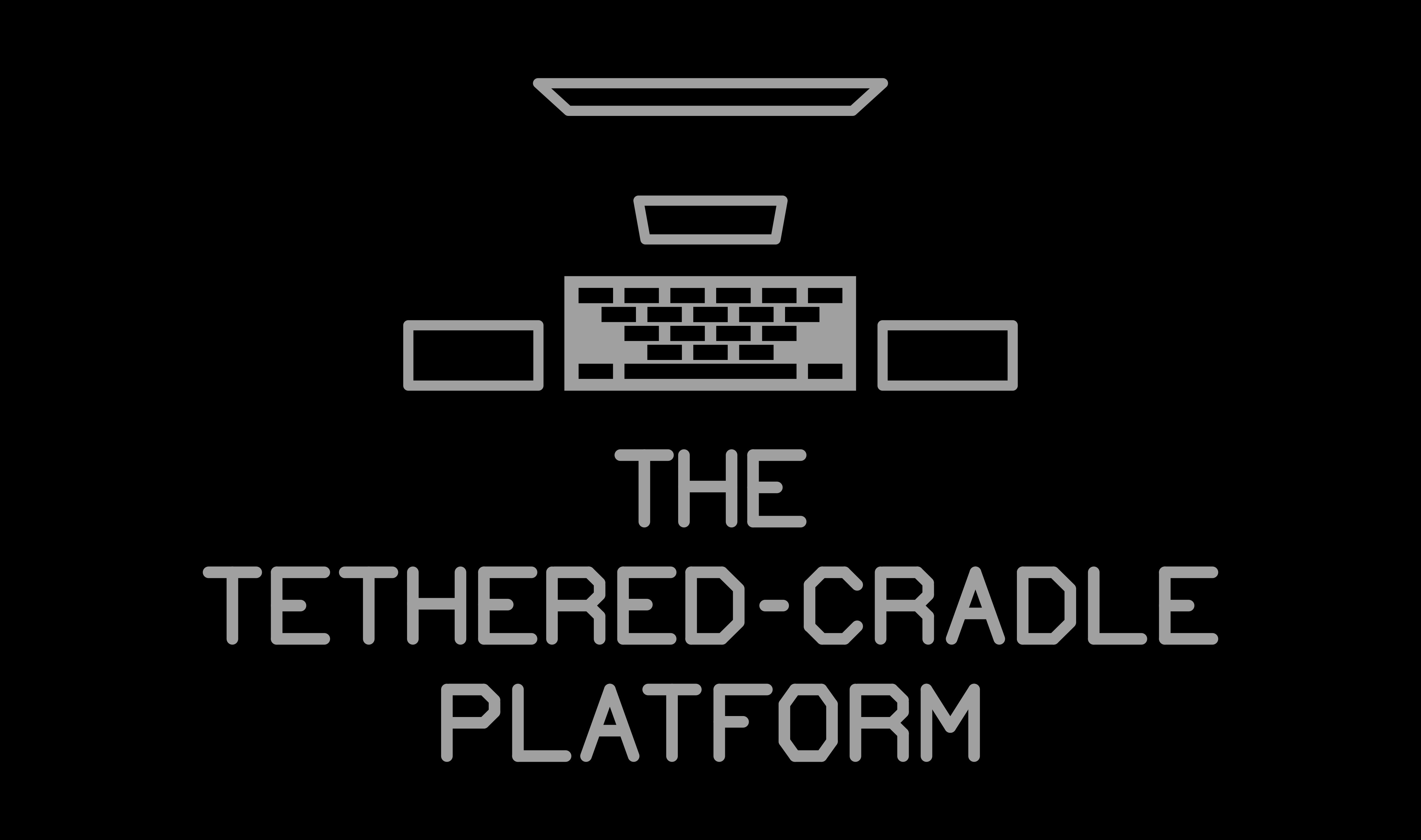
The Tethered-cradle platform is a portable-desktop-PC format platform based on a smartphone. It is being designed to be used for PC-based design.
The platform consists of hardware and an app-development tool for developing apps targeting the hardware.

A smartphone, fitted inside a specially designed tethered-cradle, is secured to a table-top and connected to external screen, keyboard and other design-input accesories.

Ergonomix is a MacOS app that works in conjunction with Xcode to produce an iOS app for the Tethered-cradle platform.




The planned platform has the following components:
-
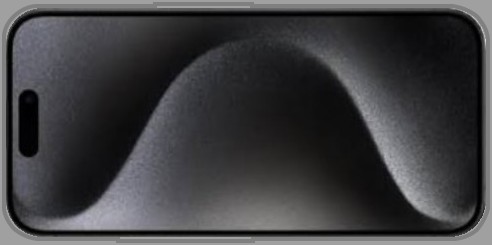
A specially designed cradle for a smartphone.
(166.6 mm x 90.6 mm x 12.3 mm, 200 gm).
-
A portable screen.
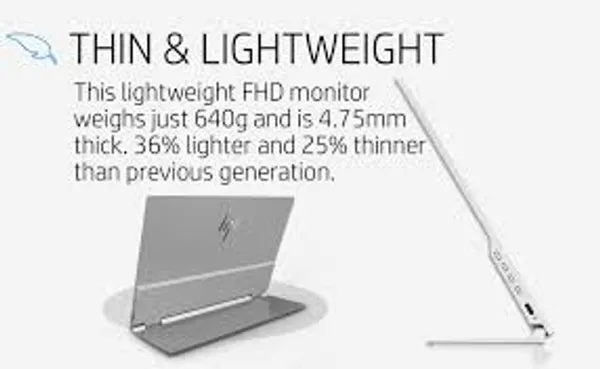
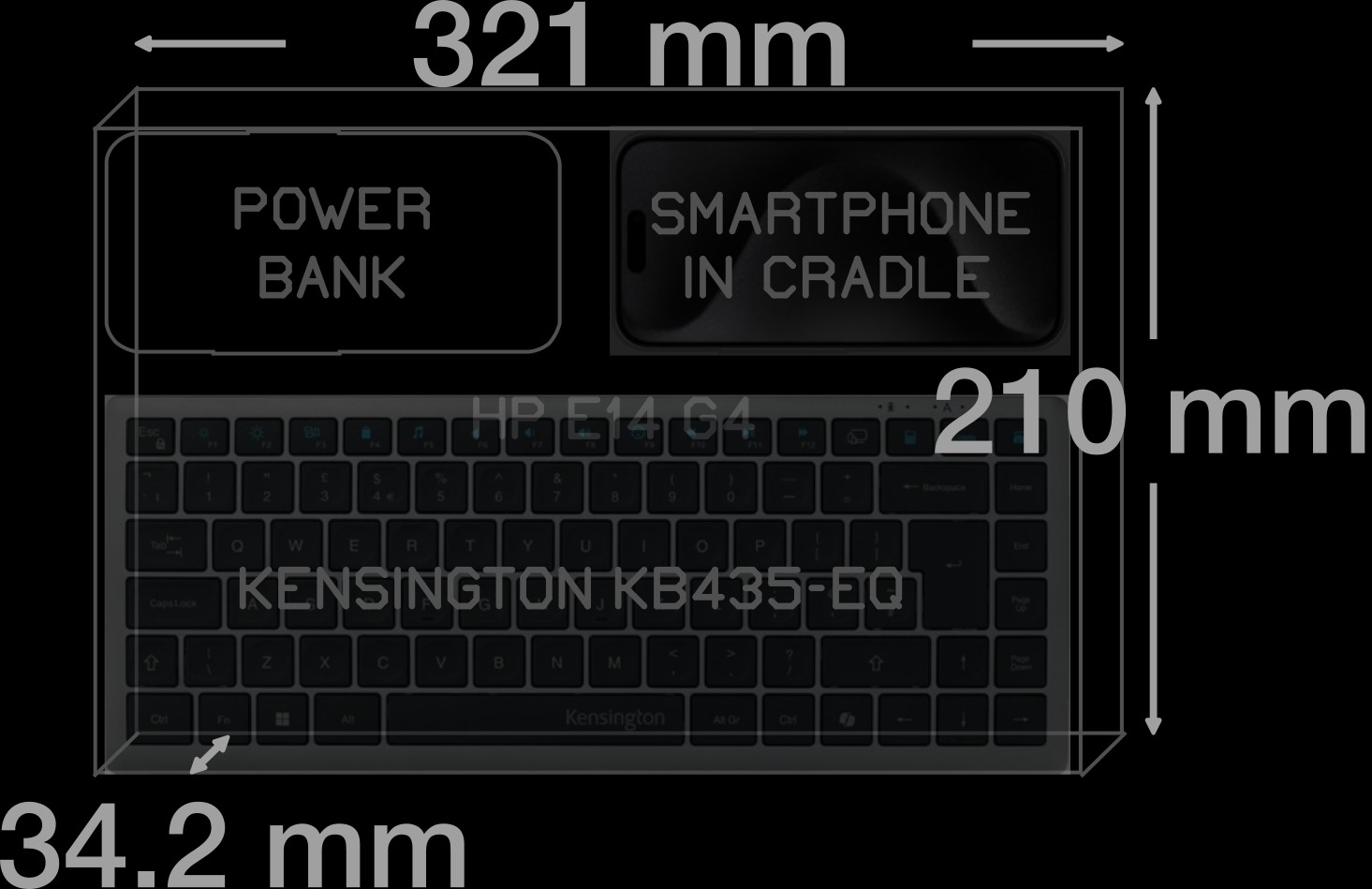
HP E14 G4 FHD screen (321 mm x 210 mm x 15.2 mm, 640 gm).
-
A compact keyboard.
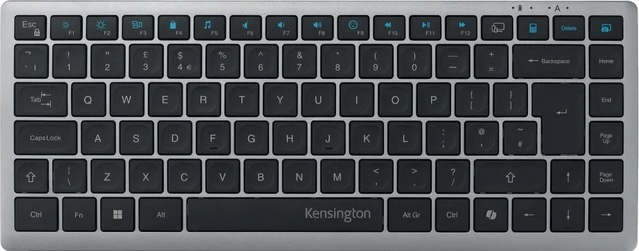
Kensington KB435-EQ keyboard (318 mm x 125 mm x 19 mm, 420 gm).
Packaging dimensions (containing box, internal volume):
361 mm x 250 mm x 40 mm. (Macbook Air 15": 340.4 mm x 237.6 mm x 11.5 mm).
Package weight (bag of parts):
1260 gm. (Macbook Air 15: 1510 gm).

The planned platform could be laid out as illustrated below:
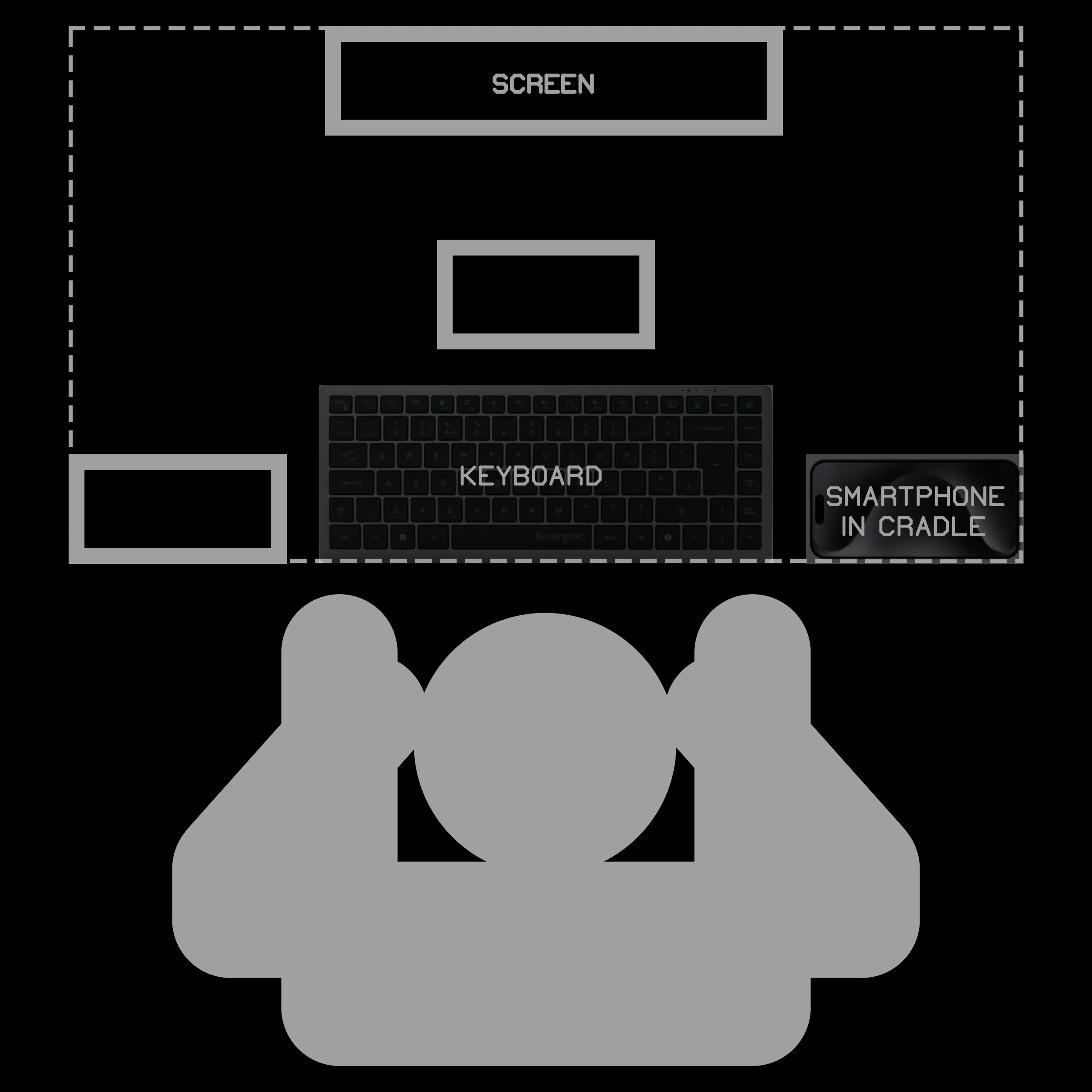
Some packaging considerations are illustrated below:

A smartphone is designed to be used as a hand-held device typically in portrait mode.
In order to use its touchscreen as a desktop input device, the smartphone needs to be secured (in an immovable way) to a table-top.
For this purpose, we are designing a cradle. When placed inside this cradle, the smartphone's touchscreen can be used as an input device similar to a touchpad. This helps simplify the design of an app for dual-use -- smartphone-only or inside this platform.
The cradle could be placed anywhere on a table-top and some mechanical controls will be provided to adjust its planar orientation relative to a table's surface.
Dimensions: 166.6 mm x 90.6 mm x 12.3 mm.
Weight: 200 gm.

This is a 14" FHD (1920x1080) portable screen.
It has a small built-in battery and a well designed hinge that folds open to a 78 deg screen-angle.
2 USB-C input ports for charging or display data.
We use a small powerbank (such as Xiaomi 4900 mAh) to keep the screen charged.
Dimensions: 321 mm x 210 mm x 15.2 mm.
Weight: 640 gm.

This is a lightweight, compact form-factor keyboard.
It connects wirelessly over Bluetooth and has a rechargeable battery.
Dimensions: 318 mm x 125 mm x 19 mm.
Weight: 420 gm.

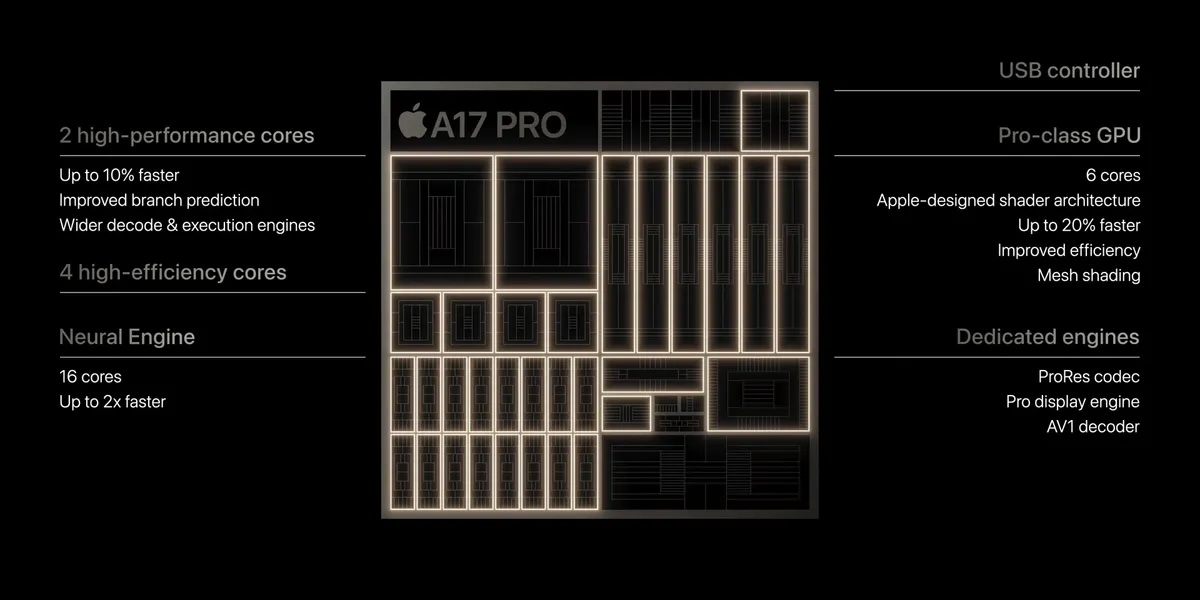
Apple's A17 pro SOC contains a 3.78 GHz ARM ISA based microprocessor,
a 6-core graphics engine and a 6.4GHz DDR4 memory interface.
It's a well designed low power SOC that can easily be used in a desktop design environment.
It can drive a 4k screen at 30Hz
and has enough processing power for graphics intensive applications
(that have high computational requirements).

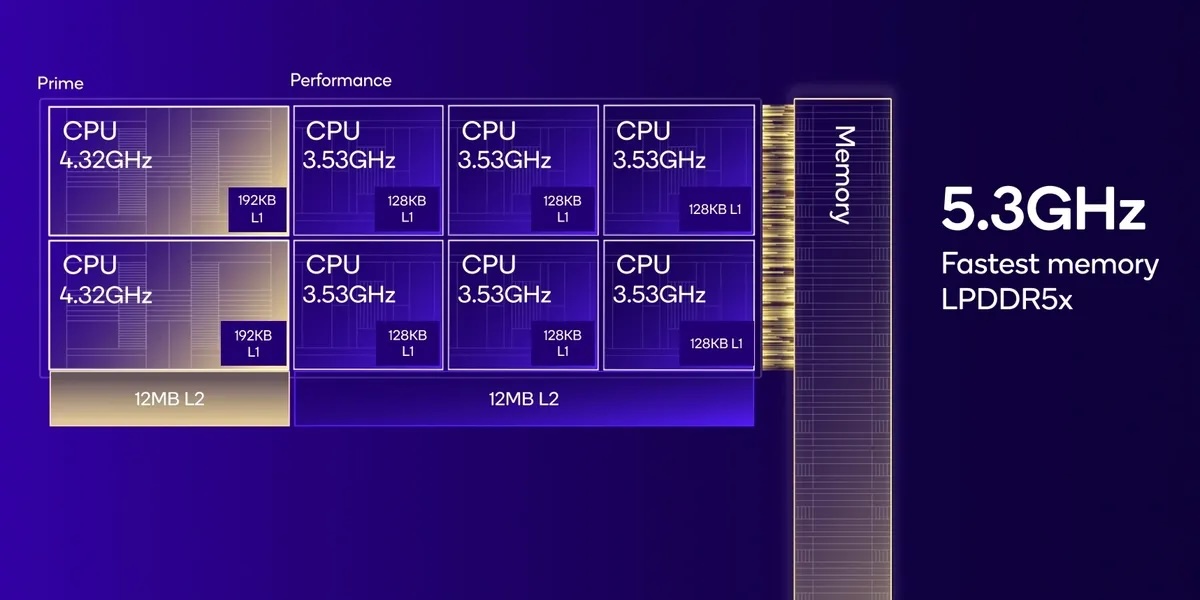
Qualcomms's SnapDragon 8 SOC.

The primary functions of any graphical user interface are: selection, timed-execution, text-input and content description. Content description using a GUI is a good way to validate its efficiency. A good way to test a PC platform, in today's context is to test its UI-efficiency. We plan to showcase the Tethered-cradle platform, by demonstrating 3 of our apps running on it -- Ergonomix for data editing, Hex-draw for 2D graphic design and The Specifier for 3D MCAD.